
MORE THAN 2020
VISION THERAPY AT CLASSIC EYES
Unlock your potential with vision therapy
VISION THERAPY AT CLASSIC EYES
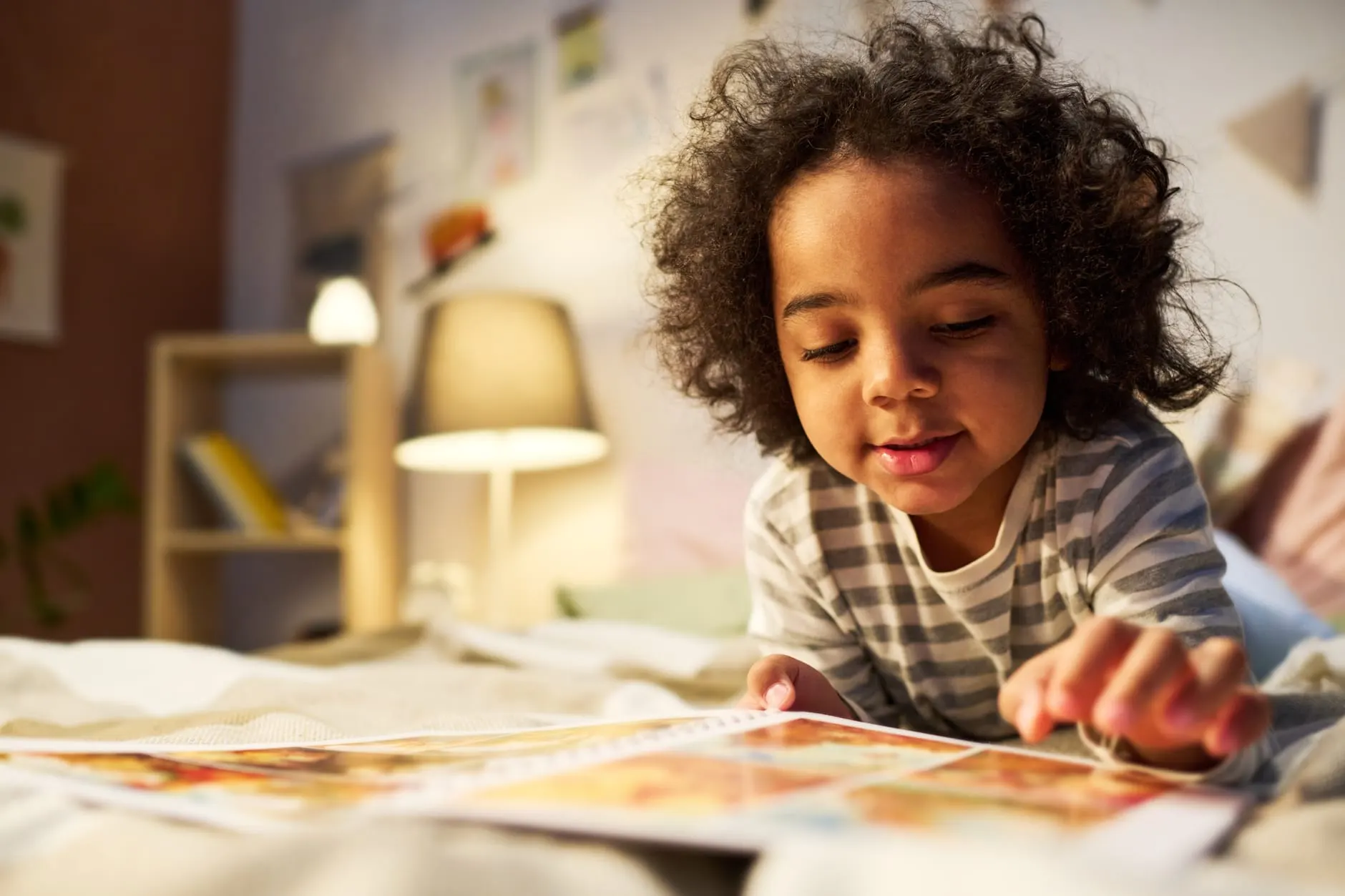
Vision therapy strengthens the connection between your eyes and brain. Unlike glasses or contact lenses, which simply correct eyesight, vision therapy addresses the underlying visual skills needed for clear, comfortable, and efficient vision. From difficulties with reading and focus, to eye strain, double vision, or issues following a concussion, our tailored sessions help retrain the visual system for lasting results. Whether for children struggling in school or adults experiencing visual challenges, vision therapy can make daily life clearer and easier.
UNDERSTANDING VISION
Helpful articles to learn about vision, vision therapy and the treatments available to unlock your potential.
WHAT IS VISION?
It’s how we see, right?
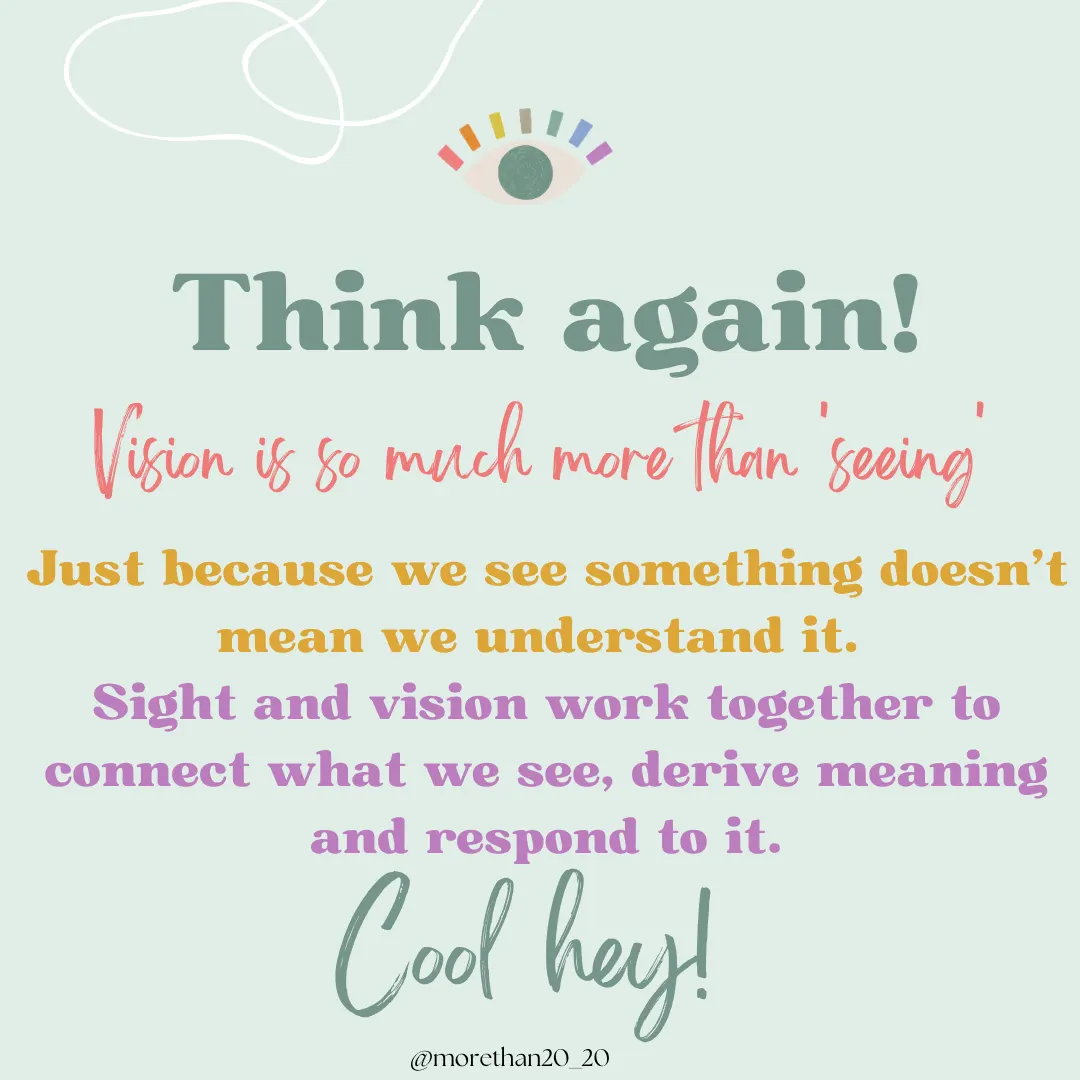
Not quite. Seeing clearly is only part of the picture. Vision is how your eyes and brain work together to take in what’s around you, make sense of it and respond.
Your eyes collect the information, and your brain does the rest. It works out where things are, what they mean, how fast they’re moving and what to do next. That happens hundreds of times a minute, whether your child is reading a page, catching a ball or copying from the board.
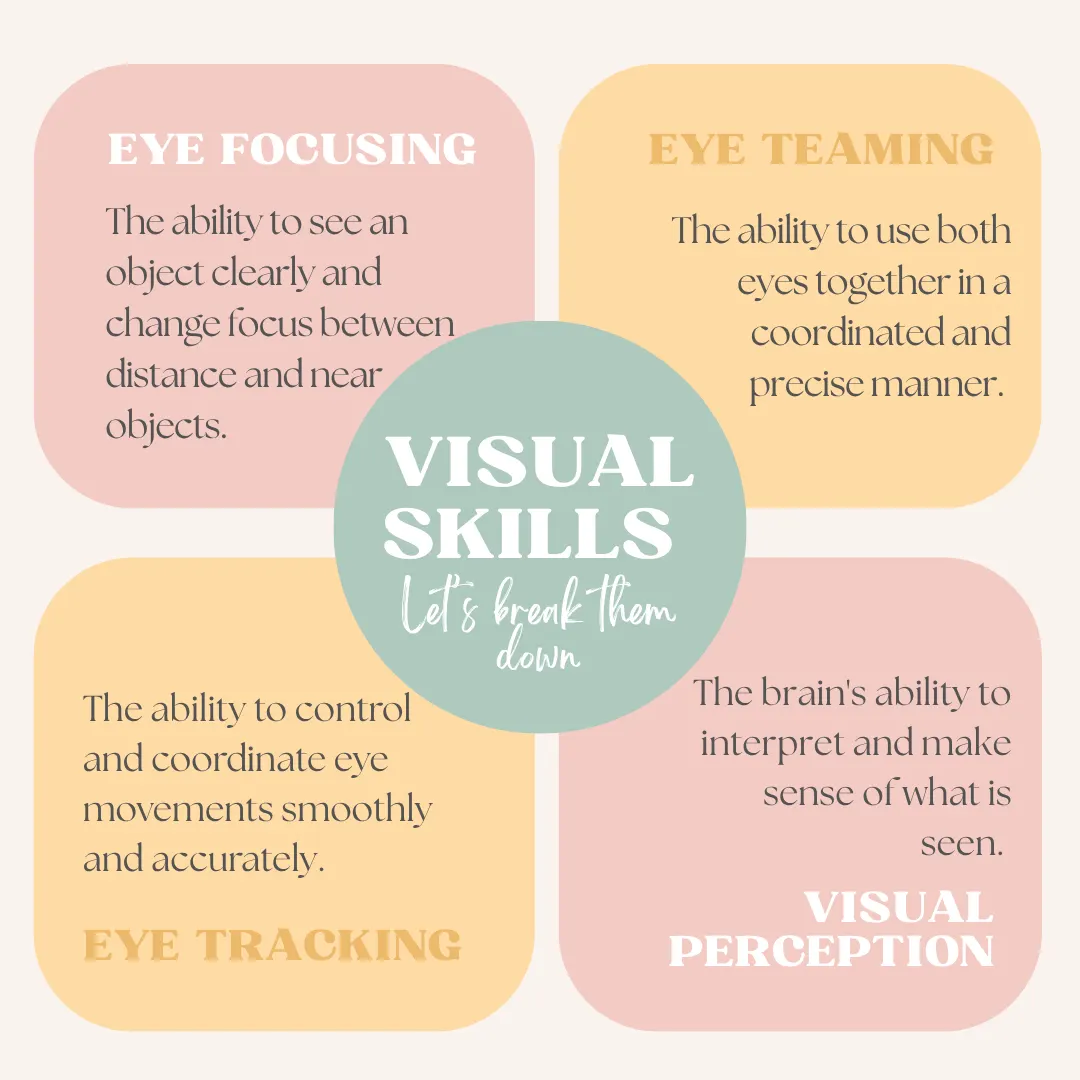
A standard eye test checks how clearly you see letters on a chart at a distance. It’s an important check, but it doesn’t tell us how well the eyes focus, team, track or process what they see. That’s why a child can have 20/20 eyesight and still find reading, learning or sport much harder than they should.
The good news? Visual skills are learned, which means they can be developed.
VISUAL SKILLS
It's all about functioning vision. Functioning vision is how your entire visual system, eyes, brain and pathways work together to help you interact with your environment.
Our visual skills allow the eyes and brain to work together. They are crucial for reading, learning, sport and daily activities to be successful.
Concerned about your child's visual function? Contact us to find out how we can help.
SIGNS & SYMPTOMS
Don't be fooled, visual difficulties can be easily masked.
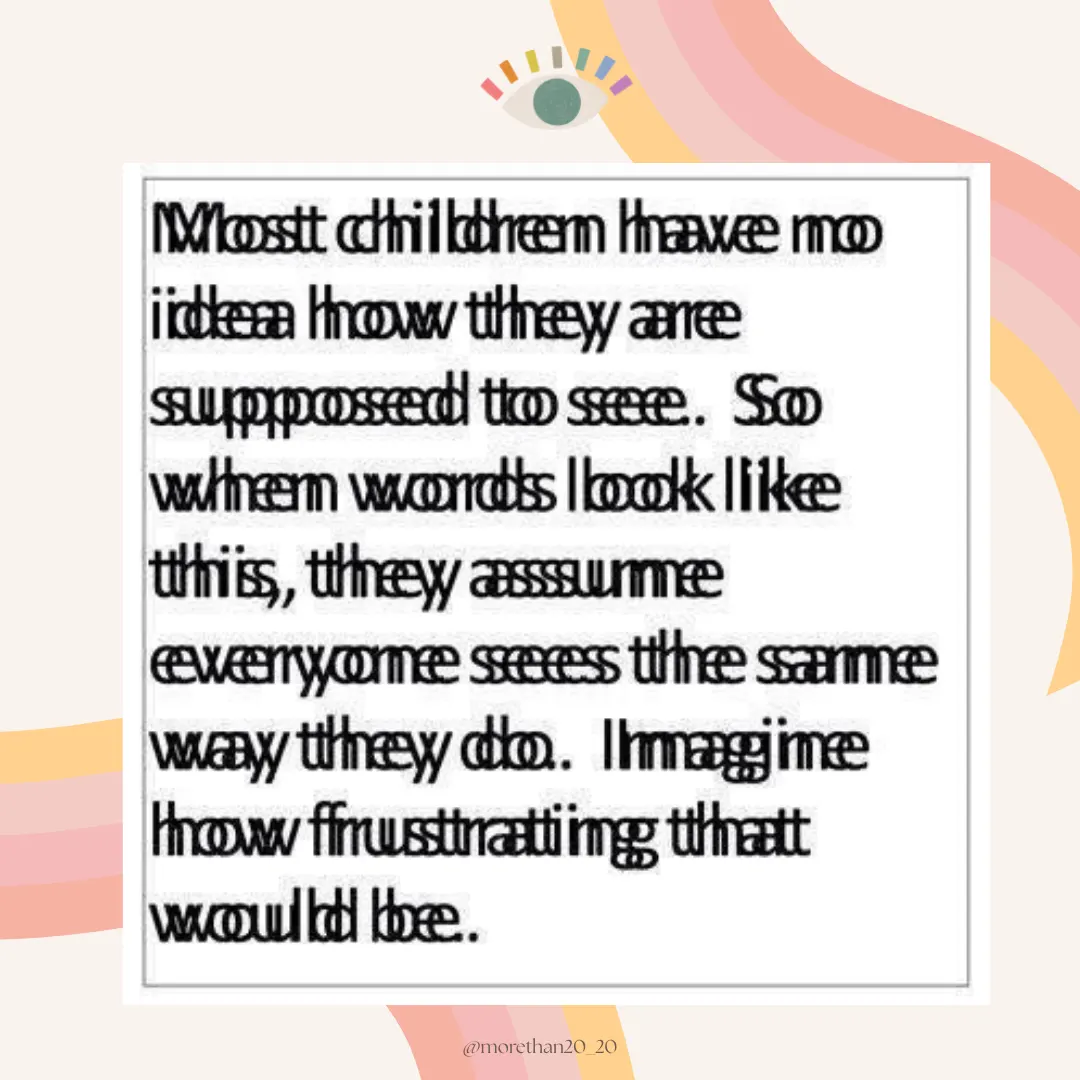
How does a child know that this is not normal? They don't! Children often assume that the way they perceive the world is the same as everyone else because they have no other frame of reference.
If they've always seen this way they don't realise it's unusual because they don't know what clear vision looks like. Wow! No wonder reading feels an effort.
PHYSICAL SYMPTOMS
Does your child display any of the following?
- Excessive blinking
- Holding books too close
- Tilting the head to the side
- Clumsy or accident prone
- Difficulty catching or throwing
- Poor hand-eye coordination
- Sore eyes
- Often closing or covering an eye
- Headaches
- Squinting
- Rubs eyes
- Preference to use one eye over the other
- Eye turns in or out
FUNCTIONAL SYMPTOMS
Does your child display any of the following?
- Confuses rights and lefts
- Frequently mixes up or reverses words or letters
- Frequently loses their place when reading or copying
- Uses their finger as a tracker
- Often skips, omits or misreads words or lines
- Tilts or twists their head when looking at a book
- Poor comprehension, cannot remember what they have read
- Struggles with handwriting
- Moves their head across the page, instead of the eyes
- Struggling to progress at school
BEHAVIOURAL SYMPTOMS
Does your child display any of the following?
- Short attention span
- Easily irritated or frustrated when completing close work
- Tires quickly when completing close work
- Dislikes reading
- Dizziness
- Motion sickness
- Fidgety and restless in the classroom
- Complains of blurred vision
- Complains of double vision
- Words moving on the page
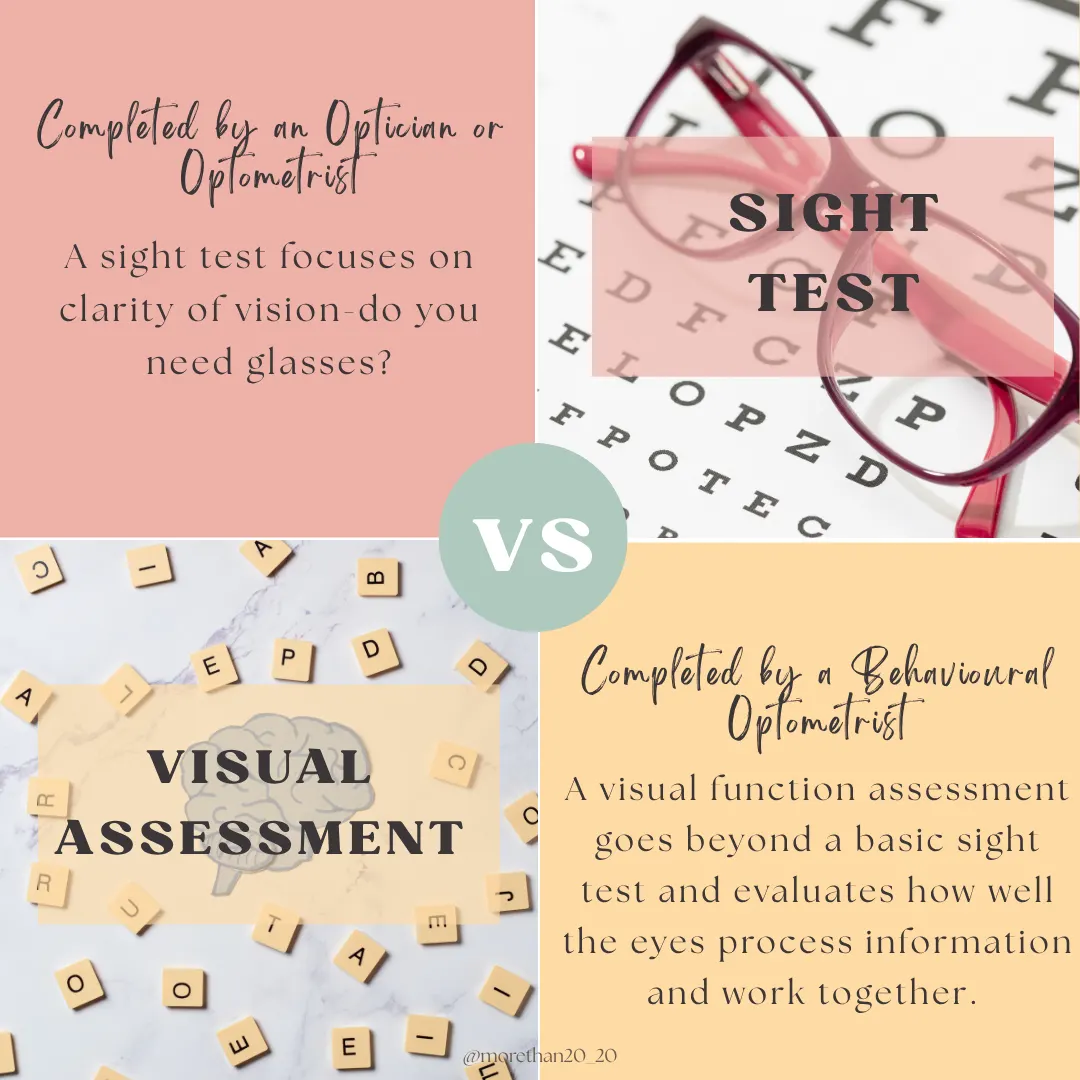
EYE TEST VS VISUAL ASSESSMENT
SIGHT TEST
Completed by an Optician or Optometrist. A sight test focuses on clarity of vision: do you need glasses?
VISUAL ASSESSMENT
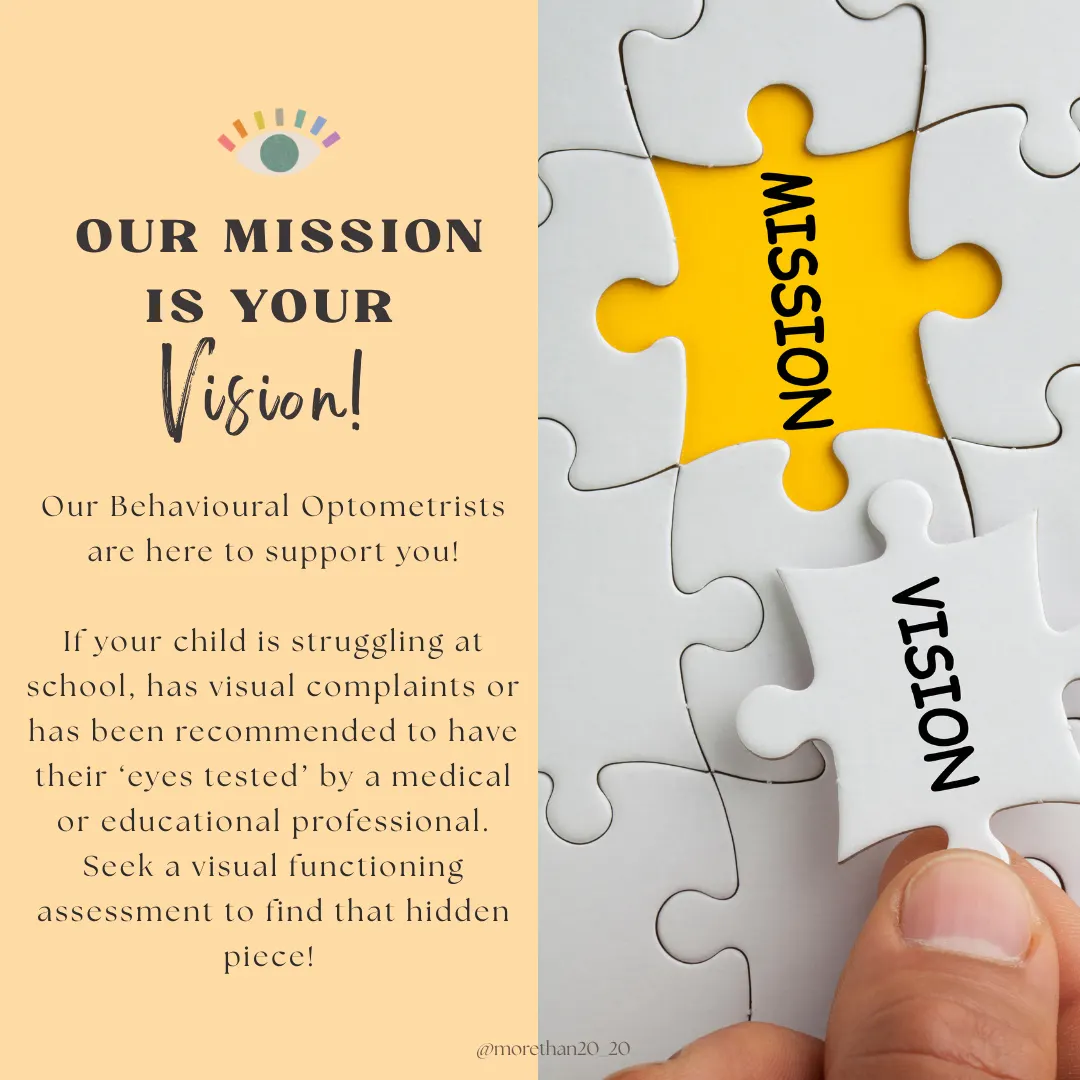
Completed by a Behavioural Optometrist. A visual function assessment goes beyond a basic sight test and evaluates how well the eyes process information and work together.
WHAT IS VISION THERAPY?
WHY IT MATTERS
Did you know that 80% of learning comes through the eyes? This means that any difficulty with visual function can affect how your child learns and interacts with their world.
With vision therapy, we can help strengthen the communication between your child's eyes and brain, helping them to unlock the tools they need for better learning and life. It's all about building new, stronger neural pathways.
HOW IT HELPS
Through targeted exercises we can help your child learn and develop new visual skills to improve:
- Focus
- Eye teaming and coordination
- Tracking and eye movements
- Visual processing
- Depth perception
- Amblyopia and strabismus
Your child's brain is wired for growth and we're here to help unlock that potential.
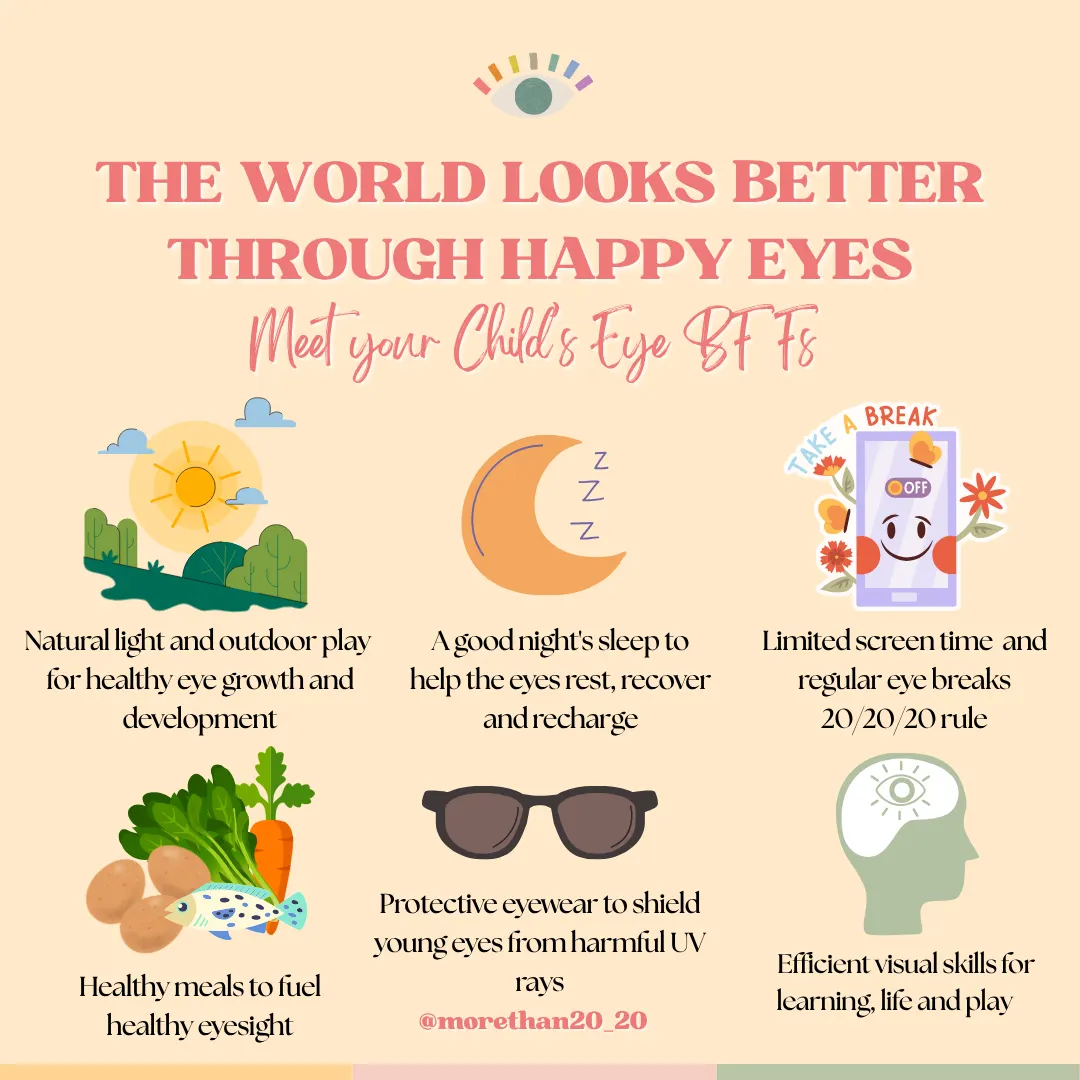
CHILDREN'S EYE HEALTH
Want to keep your child's eyes happy and healthy? Say hello to their visual bff's.
Healthy vision habits are essential for children's learning, growth and development. By nourishing the visual system, we help them to flourish.
ENQUIRE NOW
Interested in vision therapy for your child? Send us a message and our Poole team will get back to you.
We'll talk you through the next steps, including the visual assessment and how to book.